
New methods of repairing North Yorkshire’s vast network of roads are being used to help to counter increasing pressure on the county’s highways maintenance budgets.
Highways maintenance teams are employing new techniques for the first time this summer to prevent potholes and defects opening up in roads.
The move comes as our highways maintenance budgets have been hit by rising costs due to inflation and pressures on the supply chain.
We are also facing an unexpected multi-million pound shortfall over the next four years after changes in the way funding is allocated through the York and North Yorkshire Combined Authority.
Executive member for highways and transportation, Cllr Malcolm Taylor, said: “We are looking at increasingly innovative ways to deliver our highways maintenance programmes, which is vital as we face major pressures on our budgets. Our highways teams are at the forefront of our efforts to make sure services are delivered as effectively and efficiently as possible.
“While we are facing very significant financial challenges, we are committed to maintaining the county’s extensive networks of roads while offering the very best value for our taxpayers.”
New methods to try and prolong the lifespan of the county’s roads and extend the time between resurfacing while reducing the number of defects emerging will see an innovative treatment applied to roads from this summer.
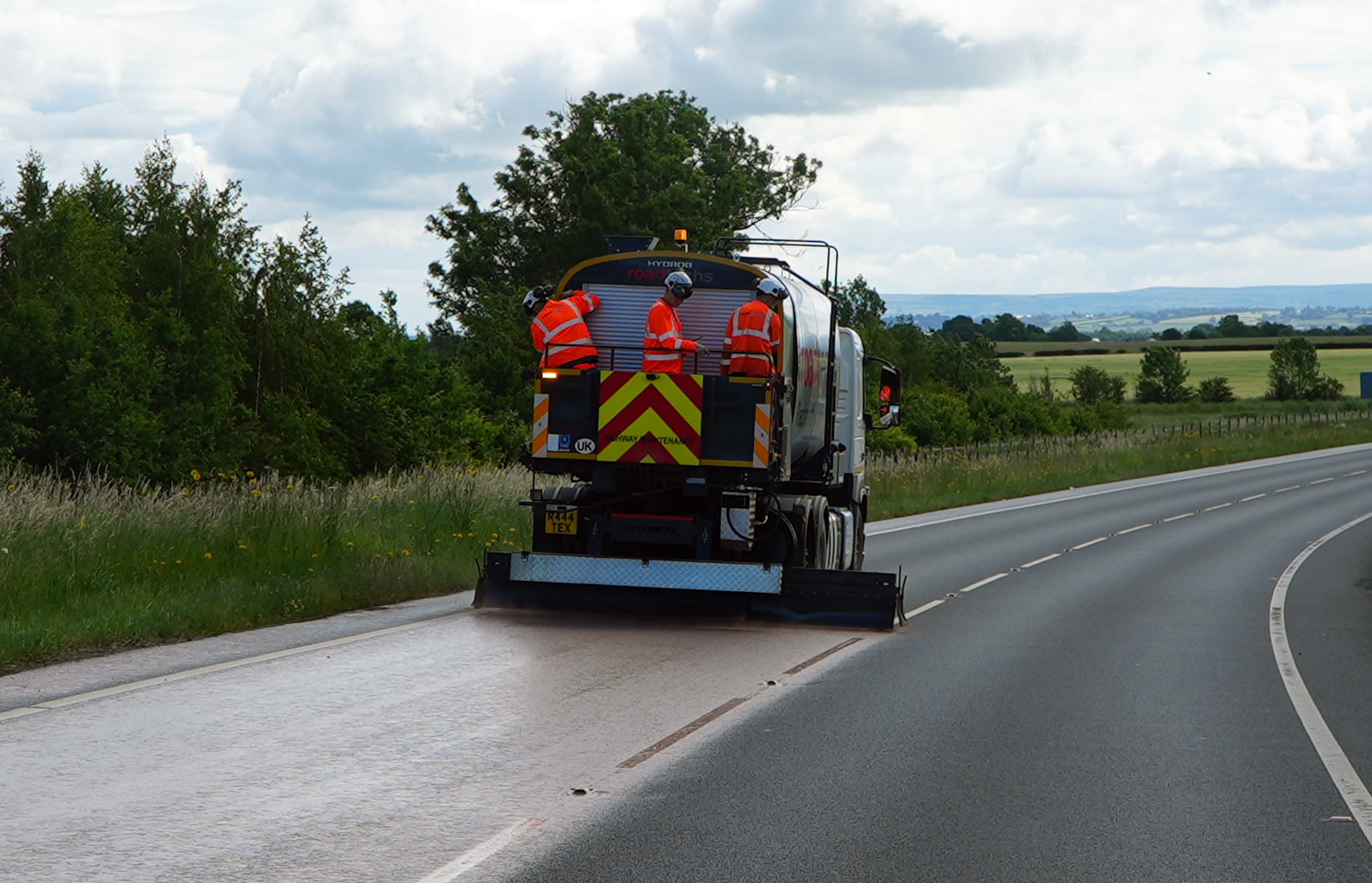
The Reclamite treatment is being used on the local access road that runs parallel to the A1(M) between Leeming Bar and Catterick, on the bypass that links Bedale and Leeming Bar as well as roads near Topcliffe.
The preventative treatment involves a solution being sprayed on a carriageway that rejuvenates the asphalt. This helps to prevent cracks and defects opening up that can lead to potholes and further damage to a road surface.
Each treatment extends the life of a road by five years and can be repeated. It is quick and easy to deliver compared to resurfacing schemes and is much cheaper, helping to reduce overall costs by as much as 40 per cent.
The Reclamite treatment, which is being provided by a company called Roadtechs, is also more environmentally friendly and dramatically reduces both carbon dioxide emissions and waste, while ensuring roads stay in a better condition for longer.
The UK business manager at Roadtechs, Will Lewis, said: “The treatment is a proven way of ensuring that disruption can be kept to a minimum while significantly extending the life of a road.
“The Reclamite process is a more environmentally friendly solution to highways maintenance and significantly reduces the costs for councils. We are really pleased to be working with North Yorkshire Council and NY Highways to bring the benefits of the treatment to the road users in the county.”
Despite the financial pressures, we are investing about £28 million on carriageway works on the 5,800 miles of roads in North Yorkshire, which is England’s largest county.
Other preventative measures include retexturing, which helps to prolong the lifespan of the carriageways, along with inlay patching to repair defects, which lasts longer and reduces the number of return visits that are needed.
Officers are also working closely with our highways company, NY Highways, and the wider supply chain to look at ways of delivering repairs more efficiently, with processes that use recycled material to minimise the impact on the environment.
The rising costs have been compounded by a massive reduction of at least £20 million for highways maintenance in the county over the next four financial years which were voted through in March at a meeting of the York and North Yorkshire Combined Authority.
Council leader, Cllr Carl Les, said: “The Government announced additional funding for highways maintenance, which is welcome, but we have had these benefits dramatically reduced by the decision to change the way funding is allocated.
“Had the funding come directly to us like it used to for many years before it came through the mayor’s office, we would be at least £20 million better off.
“We need to be clear that this will mean we simply can’t deliver as many highways maintenance programmes as we had hoped, and that will impact our communities and businesses across North Yorkshire.
“Our highways teams are employing the very latest techniques and treatments, but this is only going a small way to countering such a significant reduction in funding.”
We are set to receive £63.8 million for highways maintenance in 2026/27, which will be an increase from £57.8 million in the previous financial year.
But due to the changes, the council will see a reduction for highways maintenance of at least £20 million as funding is due to fall over the following three financial years compared to what would have been received directly from the Department for Transport.
A total of £4 million in funds which would have come to us from the Department for Transport will now be redirected to City of York Council.
Cllr Les and Council deputy leader, Cllr Gareth Dadd, both voted against the proposals at the combined authority meeting at County Hall in Northallerton in March.
But the mayor, David Skaith, and two councillors from City of York Council, who are also members of the combined authority, all voted for the changes in funding allocations.